


Chem-Dry Vs. Hot Water Extraction: Which Carpet Cleaning Method Actually Works Better?

Updated: Mar 12
In this article we will attempt to educate our consumers on the most popular methods of carpet cleaning, we will outline the benefits, downfalls and overall job expectancy. By the end of this, you should know exactly what to expect regardless of which route you decide to go! In our opinion, Chem-dry has its place for maintenance and light soil cleaning, but when it comes to truly performing a deep cleaning on carpets, hot water extraction reigns supreme. It is also considered the industry standard!

How Chem-Dry Works:
Chem-Dry is a process that has been around since the late 1970's, it utilizes carbonated cleaning solution for soil suspension, rotary or scrubbing machines for agitation, low moisture extraction tools, and post cleaning spot agents. When done correctly this method can provide good cleaning results for carpets that are not heavily soiled or have severe staining/oil issues.
The Process:
When done correctly, the process is somewhat similar to what we do in Hot Water Extraction. It involves a few similar steps and a few differences.
Fiber Identification, traffic lane inspection, spotting evaluation. This step is vital in understanding what cleaning method will work, where to focus attention and overall the scope of the work involved.
Pre-Vacuuming. This is an important step in any carpet cleaning method you decide to go with. Using a commercial vacuum with a beater bar is very important for removing as much dry soil as possible before continuing with any cleaning method.
Application of carbonated cleaning solution. The idea behind the carbonation is similar to using club soda for stain/spot removal. The activated solution helps in soil suspension utilizes the micro Co2 molecules to release the hold soil has on the fiber.
Mechanical Agitation. Using a rotary bonnet machine, counter rotating brush machine or rotary extraction machine, this step is vital to help the cleaning solution further break the bonds between soil and carpet fibers.
Extraction. Using low moisture extraction tools, here is where they are able to get much shorter dry times, but also cannot reach as deeply into the fibers. This allows carpets to dry in 1-3 hours typically.
Conclusion for Chem-Dry:
As stated above these methods can be a good solution for lightly soiled carpets, customers concerned with longer dry times and providing a good maintenance clean between deeper cleanings. While we believe in Hot Water Extraction being the superior method, we can't knock the fact that Chem-Dry still works and can provide a decent cleaning depending on circumstance.

How Hot Water Extraction Works:
Hot water extraction has been around since the creation of the carpet cleaning industry, and its considered the industry standard. We over at Two Shea's choose to use HWE because of the numerous benefits it provides. Though the dry times can be a bit longer than Chem-Dry, the benefits far outweigh the issues. Hot water extraction typically involves using premium detergents, agitation, and 200+ degree water at 300-400 PSI to reach down further into the carpets. Combine these aspects with a high powered wet vacuum system to extract as much soil as possible taking it away with us.
The Process:
There are some similarities with the Chem-Dry process, but there are some key differences, we will go in depth on each step and why its important to the process.
Fiber identification, traffic lane inspection, stain evaluation. Similar to above this step is vital in understanding the specific needs for every job, so we can use the proper products, methods and have a gameplan for the job!
Pre-vacuuming. Vital in every carpet cleaning job, this step allows us to remove as much dry soil as possible before getting anything wet, using a powerful commercial vacuum this allow us get the floors ready to be cleaned.
Detergent application. This is the first major difference between HWE and Chem-Dry, using premium soil suspension detergents the different combinations of products we can use here can provide desired results based on what needs to be addressed.
Mechanical Agitation. Another difference here between the two methods is that in HWE we don't have to use mechanical agitation on every job to achieve desired results, though we do use agitation for heavily soiled carpets or heavy traffic patterns, most jobs actually don't need it due to the premium detergent application.
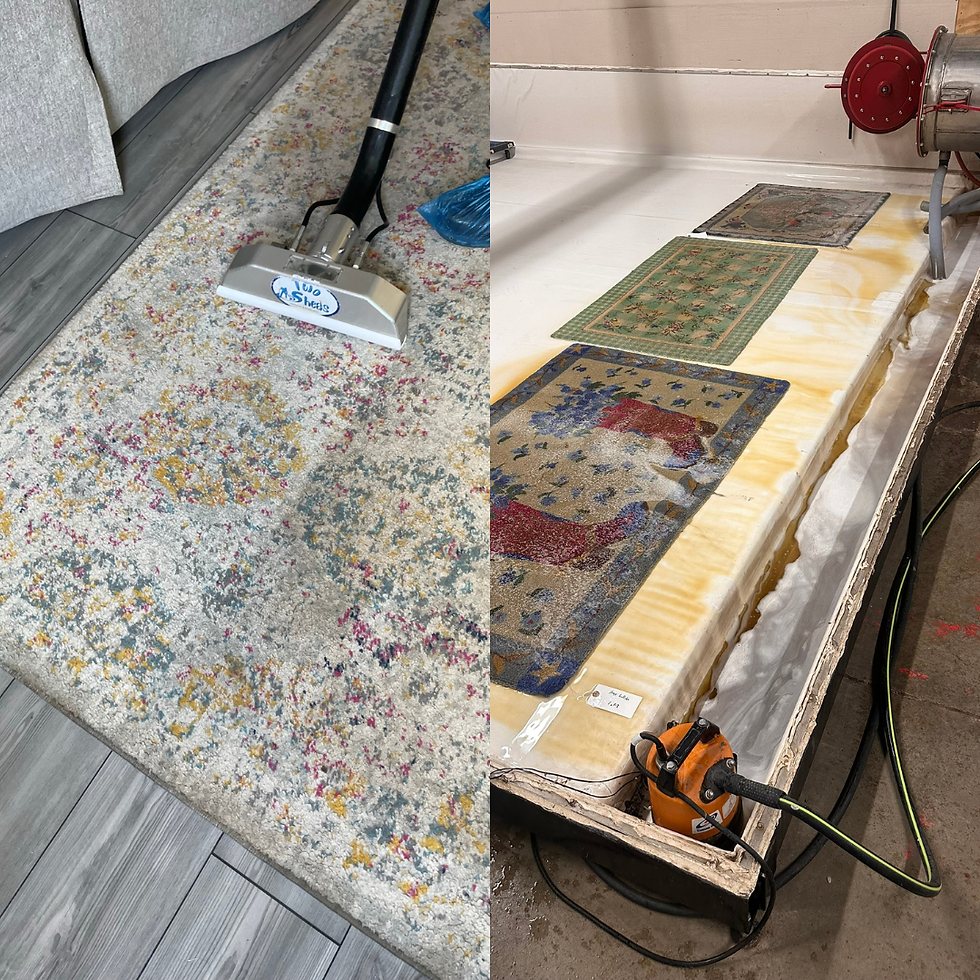
Extraction. A major difference between our extraction and Chem-Dry is that we use super hot water (200+ Degrees), at 300-400 PSI. This allows us to penetrate deeply into the fibers, all the way down to the pad. This allows maximum soil removal, allergen removal and stain removal. At Two Shea's we take advantage of multiple drying strokes to maximize water removal. Since we can reach so much further into the fiber this provides a true overall deep cleaning.
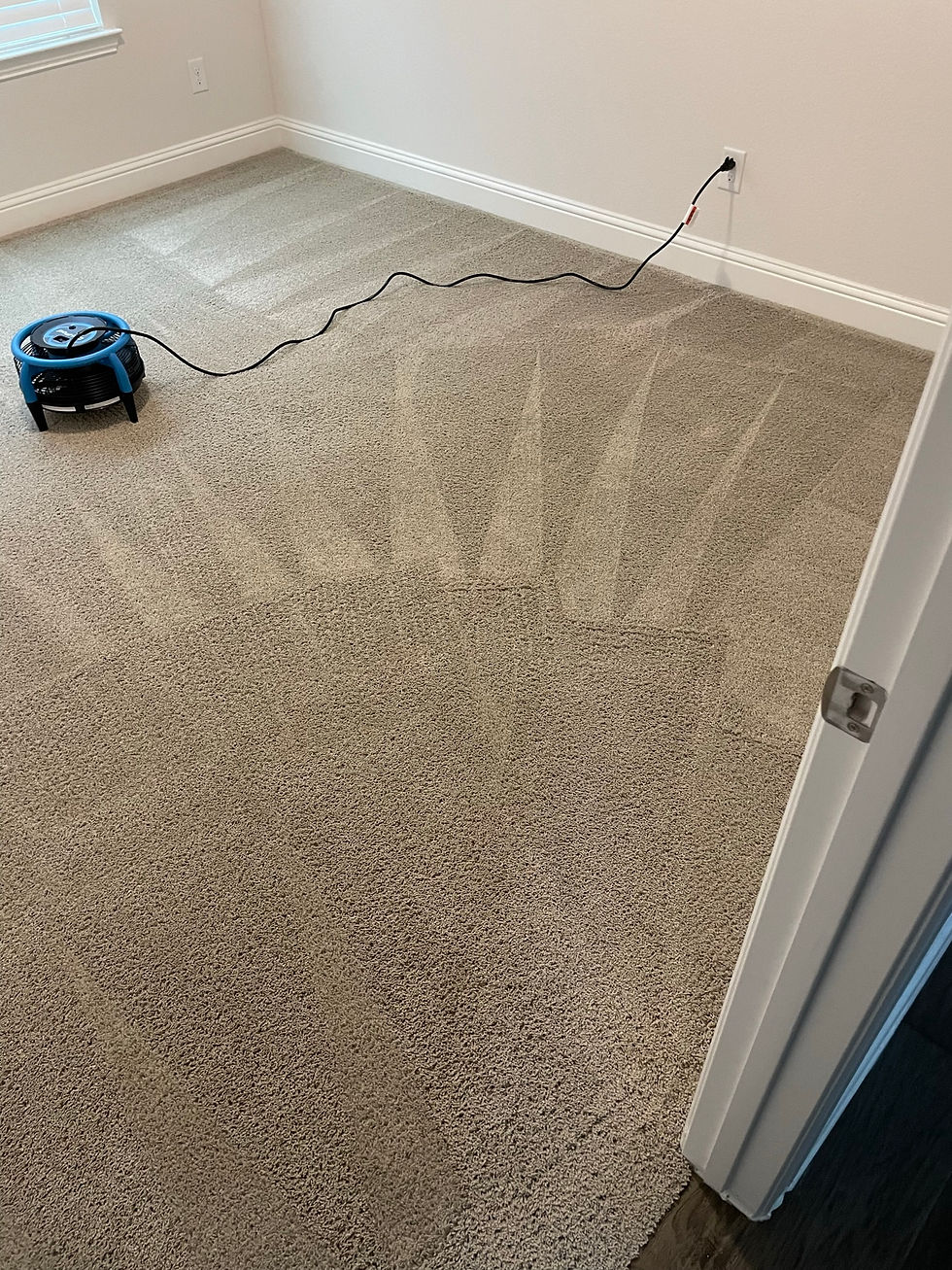
Drying fans. Since we are using more water to truly extract all the soils, detergents and allergens, we utilize drying fans in order to speed up the drying time for the floors. This does allow us to get dry times closer to 4-6 hours, sometimes however it can take 12 hours depending on humidity and temperature conditions.
Conclusion for Hot Water Extraction:
We find this method to be superior to Chem-Dry by allowing us to remove more soil, destroy and remove allergens, kill bacteria and ultimately provide a cleaner, more sanitary finished product when we leave the home. Not only will this process work for maintenance cleanings, it can work on the most difficult and soiled of carpets. Using proper techniques and processes we can get the floors incredibly more dry before leaving the home. To learn more about how Two Shea's does things, check out our Carpet Cleaning Page!
Pros & Cons For Each Method:
To simplify all the above information we will list out the pros and cons between both methods and systems so that you can understand the major factors of each!
Chem-Dry Pros: | Hot Water Extraction Pros: |
|
|
|
|
|
|
|
|
Chem-Dry Cons: | Hot Water Extraction Cons: |
|
|
|
|
|
|
The Most Important Factor On Any Carpet Cleaning Job: The Technician

Throughout this article we have tried to clarify the processes, methods and procedures that can typically dictate how well a carpet cleaning job can come out. In our opinion the most important factor, regardless of desired method or which route you decide to go, will always be the technician! A great technician with the proper training can effectively use any of the cleaning methods and produce a great outcome. Being able to correctly identify problem areas, fiber identification, and problem stains/spots is more than half the battle, because knowing this information will dictate which chemisty, methods and processes that will work to solve the issues. Here we will explain why it matters so much who actually does the cleaning.
Our List On Why The Technician Matters:
Following methods and practices all the way through, this means not cutting corners, skipping steps or rushing through a job. It doesn't matter which carpet cleaning method you use, if vital steps are skipped in the cleaning process, you the customer will be left with a sub-par job at completion.
Identifying Problem Areas and Stains Etc. This is another important factor because for example, wool reacts differently than synthetic. Mustard stains require different products than ketchup. Oils and grease don't respond the same on natural fibers as they do synthetic. This is why properly identify the problem areas and fiber type are key in providing an excellent job.
Use of Equipment- Properly knowing how to use the equipment provided for the job makes a ton of difference as well. “A sword is only as good as the man who wields it.” This saying has been around a long time and it still holds true in our industry today. Someone who truly understand why each step involved is there, will always do a better job than someone just willy-nilly throwing a wand around.
Proper Drying- One of the most overlooked things we commonly see in our industry is the implementation of dying equipment and dry strokes. When cleaning a carpet its important to follow up your "Wet Strokes", that is when steam is being applied, with at least 2 dry strokes. Generally this is one stroke forwards followed by another back with no steam applied. This is allowing us to actually extract the dirty water up, stop re-wicking of spots and also leads to faster drying. Secondly using high power fans, though the carpet might not be completely dry when we pack up the fans, the boost in dry times you receive by this fans often reduces dry time by 40-50%.
Chemistry. Chemistry. Chemistry. This is another incredibly important, often overlooked, aspect of a job. We see a lot of technicians who just believe in one "secret sauce" used job after job. As stated above, the type of soil, fiber, spots and stains all make a difference in what it takes to remove them. Also most cleaning agents are very high alkaline solutions, its important to use an acidic rinse in most cases to return the carpets to a PH neutral state. This is one of the biggest reasons customers will see carpets get dirtier after having them cleaning. Alkaline floors still have residue in them and will attract dirt and soil to them, whereas neutral floors do not attract or hold soil.
All in all, at the end of the day, almost any carpet cleaning method or process can leave you with the desired result of cleaner floors. However when you have all the things align, a great technician, the correct process followed, great products, a well tuned working machine, and proper techniques, you will see not just a "good job" but ultimately a "great job" completed! This magic combination will have your carpets looking phenomenal, feeling soft and plush, smelling fresh and ultimately the sense of money well spent for a job well done.
Conclusion:
While we hope to earn your business here at Two Shea's Restoration, ultimately we hope to help all consumers to make the most informed buying decision with their hard earned money. We have strict policies and enforcement for all our processes to make sure all jobs are done correctly and to the best of our abilities which is why we've earned our 5 star status on Google. We hope that by educating you on all processes and industry methods, that it will help you to make the best decision for your cleaning project. Always ask your carpet cleaning provider about their process, and what steps are included for the price they give on the phone. Often times we will see very low prices advertised, just for the technician to show up and inform us that it will be extra for soap, vacuuming, fans, scrubbing etc. By the time they leave the ticket has increased by 2-3x. Here at Two Shea's we try to be as transparent as possible, offering our Standard 11-Step Cleaning process, which covers most cleaning issues, for a very competitive price. You will know that booking with us will encompass all your cleaning needs at the price quoted on the phone!
You can learn more about us and our processes on our carpet cleaning page, where we post specials, information about us and where you can directly book with us. Finally here is the page for all cities and areas we service!

Comments